
5G is the fifth generation of wireless technology, built on the progress of 4G, 3G, 2G, and 1G. Like a smartphone upgrade, mobile networks get updated too. In retrospect, 2G was the era of SMS and picture messaging, while 3G introduced mobile internet access. 4G made streaming and sharing the norm, and 5G is just the most recent advancement in mobile network technology.
It’s a whole new level of speed and convenience in connectivity. 5G allows uninterrupted streaming, high-speed downloads, and the ability to connect everyone and everything together to a single virtual network. Finally, the technology that can keep up with your daily routine—a quantum leap in wireless network speeds and bandwidth.
Understanding 5G: How did we get here?
The rapid evolution of wireless cellular technology since its introduction over 40 years ago has transformed communications between humans and machines, and between businesses and customers. With the rollout of 5G, a lot has changed in digital connectivity, such as faster data transfer speeds, the rise of remote work, and the enabling of AI (artificial intelligence) technologies and IoT devices.
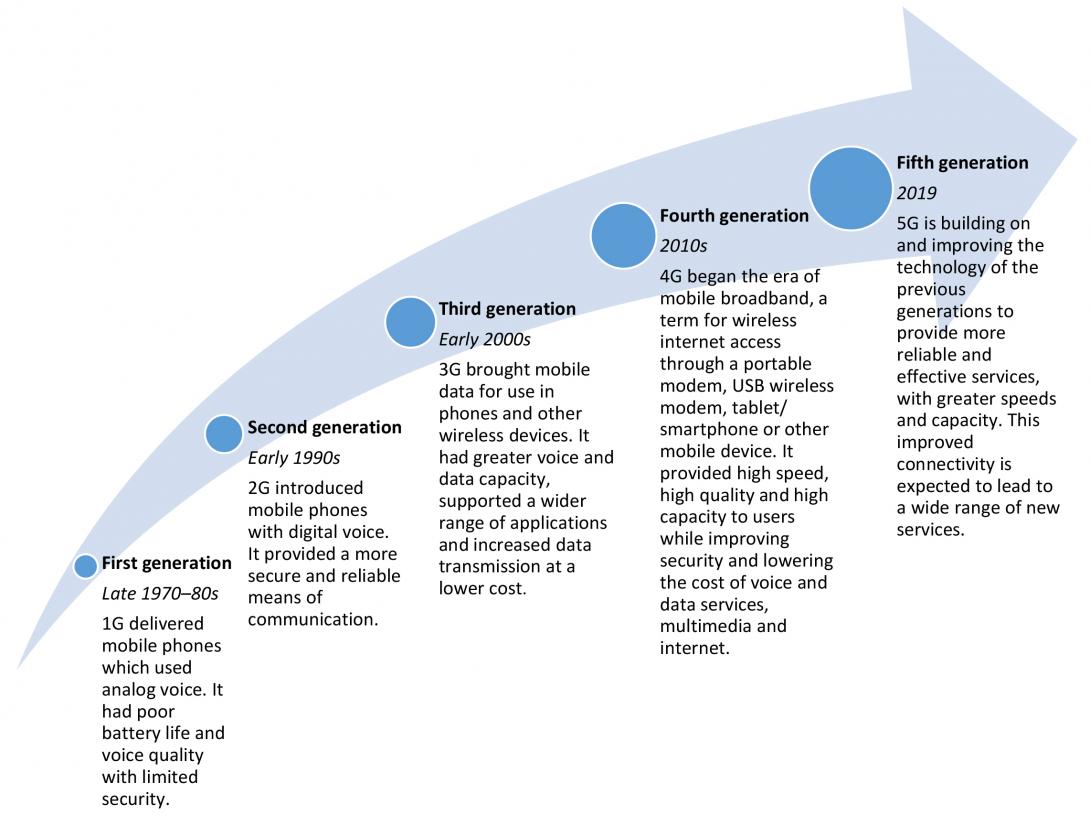
So, before we go discuss the unstoppable rise of 5G standalone, here’s a timeline from the first generation (1G) to where we are today: 5G.
From 1G to 5G: A Brief History of the Mobile network Evolution
- 1984: 1G – The beginning of Mobile Voice Communication
Initially launched by Nippon Telegraph and Telephone (NTT) in Tokyo in 1979, the first generation of wireless cellular technology, which features and supports voice only, was rolled out to cover the whole of Japan by NTT in 1984. In 1981, the Nordic mobile telephone system was launched simultaneously in Denmark, Finland, Norway, and Sweden. In 1983, Ameritech introduced 1G to the United States using the “The Brick” or Motorola DynaTAC mobile phone, with other countries such as the UK and Canada following a few years later.
- 1991: 2G – A Cultural Revolution
2G was commercially launched under the GSM standard in Finland in 1991. Far superior to anything that the first generation had to offer, 2G features better wireless connections and significant advancements in voice and data. The 2G network allows multiple users on a single channel, significantly clearer voice calls, and calls that could be encrypted. Also, people could send text messages (SMS) and multimedia messages (MMS) on their phones.
- 2001: 3G – Mobile Web browsing
NTT DoCoMo introduced 3G in 2001, with four times the data transfer capabilities of 2G. Its goal was to standardize vendor network protocols. Simply put, users can access data from anywhere on the planet. The 3G era saw the introduction of international roaming services and the proliferation of phones capable of video streaming, video conferencing, and live video chat. With 3G network, you can surf the internet, listen to music, and check your emails while on the go. During this time, the two major smartphone competitors were BlackBerry and Apple.
- 2009: 4G – The Streaming Generation
4G was first commercially deployed in Stockholm, Sweden, and Norway in 2009 as the Long-Term Evolution (LTE) 4G standard. With a minimum of 12.5 Mbps set by the ITU-R (ITU Radiocommunication Sector), 4G allowed faster mobile web access and high-quality video streaming (gaming services, HD videos, and HQ video conferencing) to become a reality for millions of consumers throughout the world. Today, 4G speeds are faster and are the current standard around the globe.
- 2019: 5G – The IoT Era
5G was first deployed in South Korea in March 2019. South Korean telecoms—KT, LG Uplus, and SK Telecom—rolled out 5G, promising superior connectivity and download speeds up to 20 times faster than 4G, as well as unlimited data quantities in gigabytes. During this time, developers knew that 3G and even 4G networks would not be able to support real-time responses from billions of connected devices seamlessly sharing data across the globe. In 2008, NASA and M2Mi Corp. worked together to develop automated machine-to-machine (M2M) intelligence technology, an essential technology for IoT services. Building on 4G LTE deployment, the fifth-generation mobility networking architecture has been years in the making. From the early 2000s until the launching of the first 5G smartphone in 2020, several agencies like GPP, ETSI, NGMN, IEEE, and the like have been involved in the standardisation of 5G.
The various paths to 5G
5G is more than just fast internet. Its superior connectivity and new network capabilities have brought us to today. Technologies such as cloud computing, AI, and IoT are revolutionising everything, from how businesses operate to how we communicate, work, and live. 5G connects everyone and everything by providing massive network capacity, higher reliability, higher multi-Gbps peak data speeds, and ultra-low latency.
What sets 5G apart from its predecessors is its extremely low latency, or the time it takes for information to travel from one location to another. Another important feature of 5G is network slicing. 5G technology allows for a network to be sliced like a pie or allocated based on your needs or a specific use case. This brings us to the topic of how mobile network operators (MNOs) deploy or launch 5G services: non-standalone (NSA) versus standalone (SA).
5G Non-Standalone (NSA) vs. Standalone (SA) Architecture
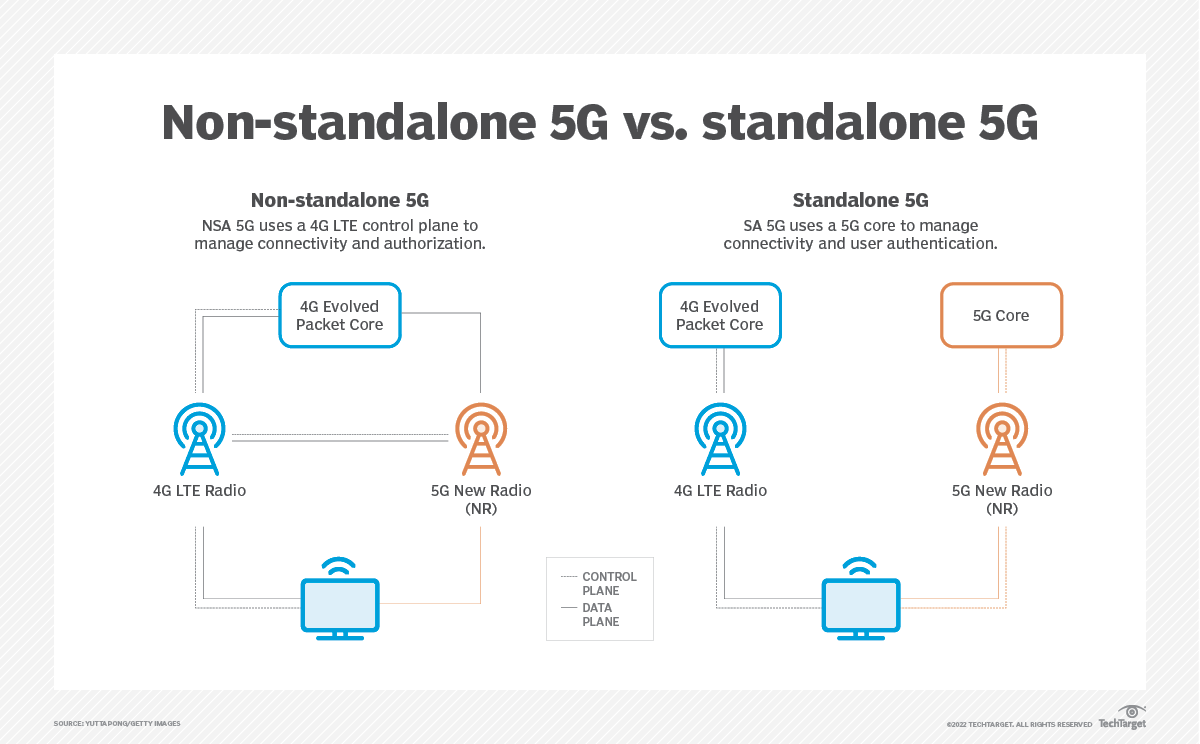
5G NSA is 5G that cannot stand on its own in terms of infrastructure. It is a 5G radio access network (RAN) supported by a 4G LTE core, known as the Evolved Packet Core (EPC).
5G SA, however, uses a 5G RAN and a cloud-native 5G core. It is an end-to-end 5G network separate from its 4G and legacy networks, fully virtualised, and built on a cloud-native architecture.
How 5G Standalone can benefit your business
5G NSA makes more sense for MNOs who are delivering high-speed connectivity to consumers with 5G-enabled devices. By contrast, 5G SA can support advanced use cases for smart cities and businesses when it comes to developing, deploying, and managing their services.
5G Standalone Capabilities for Enterprise-Focused Use Cases
- The end of glitches and delays – 5G SA unlocks one of 5G’s three subsystems, Ultra-Reliable and Low Latency Communications (URLLC). On 4G networks, latency is around 40–50 seconds. On the contrary, 5G SA provides sub-millisecond latency, which means faster transmission of large files to your clients and smooth business workflow. The creative sector and gaming industries have benefited from the super-fast response times and faster access to higher data rates of 5G SA.
- Increased capacity and coverage – Aside from improved speeds, 5G Standalone supports a much higher concentration of connected devices—up to 1 million devices per square kilometre. 5G Standalone unlocks 5G’s massive machine-type communication (mMTC) facet, which enables clients or employees to communicate at the same time, regardless of their location.
- Network slicing for specific demands – With network slicing, a 5G SA service allows businesses to have their own private 5G network. Doing so will allow you to configure or assign only the resources necessary to satisfy specific application functions or customer demands. With the network divided, you don’t need to disrupt other services just to implement a change, compared to having a one-size-fits-all connectivity option.
Looking forward…
By 2025, it is expected that 95% of Australians will have 5G coverage while significantly increasing regional coverage.
As 5G network continues to rollout and modern technologies continue to evolve, Australian businesses and consumers have yet to realise its full potential. 5G’s real-world benefits and innovative role across industries such as healthcare, mining, transport, and manufacturing are all waiting to be tapped.
Experience Australia’s best 5G network through Azentro.
Are you curious to know more about 5G—what it means to you and your business? Ask Hexicor and speak to an expert today.