
Can AI really solve the truck driver shortage? Enter Artificial Intelligence (AI) and automation—two technologies that are offering potential solutions to this labour crisis. In this blog post, we explore how AI is transforming the trucking industry and whether it holds the key to solving this critical issue.
The trucking industry plays a crucial role in keeping economies moving and transporting goods across countries and continents. However, a persistent truck driver shortage has disrupted supply chains and raised concerns about long-term operational sustainability. As the demand for goods grows, the gap between available drivers and required deliveries widens, creating significant challenges for businesses.
Australia’s transportation sector is experiencing a growing problem that may eventually hurt consumers with price hikes and maybe empty shelves. According to a recent survey by the International Road Transport Union, there are 26,049 unfilled truck driver positions in 2024, and the numbers are expected to worsen. Various factors contribute to this shortage, including an ageing workforce and retention challenges.
How AI is Addressing the Truck Driver Shortage
While AI cannot completely replace human truck drivers, it does play a significant role in addressing the truck driver shortage and can significantly mitigate its effects. Here are some ways AI can contribute:
1. Autonomous Trucks and Self-Driving Technology
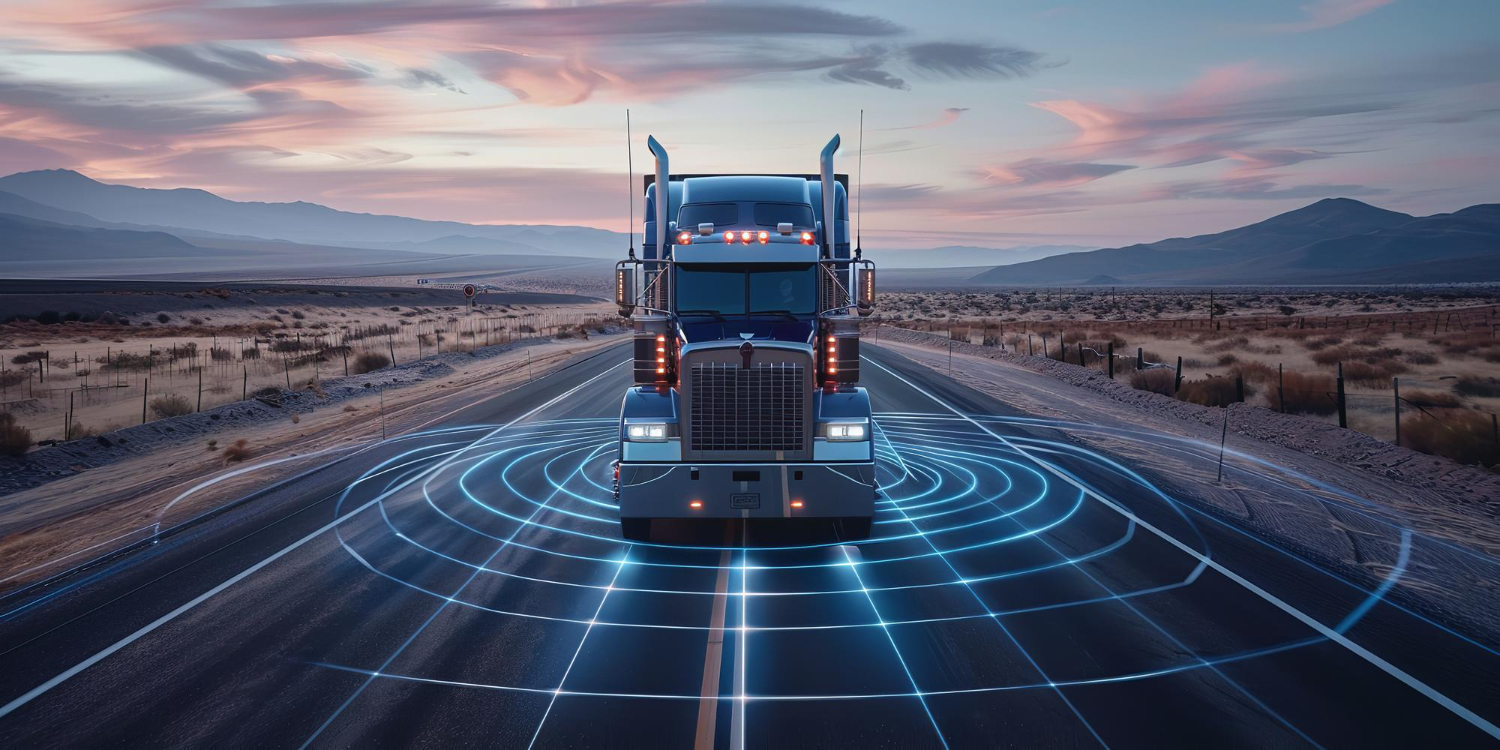
One of the most promising AI applications to tackle the driver shortage is the development of autonomous trucks. Autonomous trucks, powered by AI, have the potential to manage long-distance routes autonomously, allowing human drivers to focus on the more complex first and last miles of delivery. Companies like Tesla, Waymo, and Uber are already testing self-driving trucks capable of long-haul journeys with minimal human intervention. This can reduce the dependency on human drivers, allowing more goods to be transported with fewer people behind the wheel. Furthermore, this would potentially fill the gap left by the insufficient number of human drivers, making the logistics chain more efficient.
However, the full commercial adoption of completely autonomous trucks is estimated to be at least 30 years away due to technological and regulatory hurdles.
2. Advanced Driver-Assistance Systems (ADAS)
Advanced Driver-Assistance Systems are a suite of technologies like sensors, cameras, and other technologies to monitor the driving environment and assist drivers in various tasks. ADAS incorporates AI technologies to enhance driver safety and efficiency. ADAS features can range from basic functions like lane departure warning and adaptive cruise control to more advanced capabilities such as collision avoidance systems and lane-keeping assist. These features can help prevent accidents, reduce the frequency of accidents caused by human error, and improve overall driving efficiency. By lowering accident rates and simplifying the driving task, ADAS can improve job satisfaction and retention among existing drivers, thereby alleviating some pressures related to the shortage.
While ADAS systems have made significant advancements, it’s important to note that they are not fully autonomous and still require human oversight. Drivers should always be aware of their surroundings and be prepared to intervene if necessary.
3. AI-Enhanced Logistics and Route Optimisation
AI is improving the overall efficiency of fleet management through route optimisation and predictive maintenance. AI algorithms analyse traffic patterns, weather conditions, and delivery schedules to determine and plan the most efficient routes. This not only reduces delivery times, fuel consumption, and wear and tear on vehicles but also optimises vehicle utilisation, allowing existing drivers to cover more routes more efficiently. Additionally, AI-powered predictive maintenance tools can monitor truck performance in real-time, identifying potential mechanical issues before they lead to breakdowns.
These improvements allow trucking companies to maximise the productivity of their fleets, further mitigating the impact of driver shortages.
4. Recruitment and Training Enhancements
One area where AI can significantly impact the challenge of truck driver shortages is in recruitment and training. AI-powered tools can be used to streamline the hiring process, identify qualified candidates more efficiently, and provide personalised training programmes. Businesses can use AI to automate processes like candidate sourcing, skills evaluation, and resume screening. This can speed up the process of identifying possible drivers who meet the requirements for training and experience. AI-powered training platforms can also provide customised learning experiences that adjust to the needs and learning speeds of each individual student.
Furthermore, AI can be used to create realistic simulations that mimic real-world driving conditions. This allows drivers to practice their skills in a safe and controlled environment, gaining valuable experience without the risks associated with actual road driving.
5. Platooning Technology
Another AI-driven solution to the driver shortage is platooning, where a convoy of trucks follows closely behind a lead vehicle, using advanced AI communication and automation. In current implementations, the lead truck is manually driven while the following trucks utilise automated systems to track the lead vehicle’s movements. Platooning technology augmented by AI offers a multifaceted solution to some of the most pressing challenges in the trucking industry, including the truck driver shortage. AI-based systems enable vehicle-to-vehicle (V2V) communications and cooperative adaptive cruise control (CACC), allowing trucks to accelerate, decelerate, and brake in a synchronised manner. Advanced AI algorithms can also optimise formation configurations and adjust inter-vehicle distances in real-time based on environmental conditions such as wind speed and road conditions.
However, it’s important to note that platooning technology is still in its early stages of development and faces challenges such as regulatory hurdles, technological barriers, and public acceptance. As technology continues to advance, platooning could become a viable solution for addressing the truck driver shortage and play a significant role in transforming the trucking landscape.
AI offers promising solutions to address the issues facing the transportation industry, particularly the truck driver shortage. AI can contribute to a more sustainable and efficient transportation system by automating specific duties, enhancing safety, and optimising operations. By combining human expertise with AI technology, the trucking industry can address the challenges of the driver shortage and ensure the timely delivery of goods. Ultimately, this technological advancement and future developments may draw younger people into the profession by providing a less stressful and more advanced work environment.

Challenges and Limitations of AI in Fleet Management
While AI offers promising solutions, there are challenges to its widespread adoption in the trucking industry. Autonomous trucks, for example, face regulatory hurdles and must overcome technical challenges related to safety, cybersecurity, and adapting to unpredictable road conditions. Moreover, there are concerns about job displacement for human drivers, which the industry must address by offering retraining and opportunities for workers affected by automation.
Here are several challenges and limitations that need to be addressed:
1. Technological Challenges
- Sensor Reliability: The accuracy and reliability of sensors used for AI-powered systems are crucial for safe operation. Challenges include sensor failures, adverse weather conditions, and the ability to accurately interpret data from various environments.
- Infrastructure Capability: The widespread adoption of AI in trucking requires robust infrastructure, including reliable internet connectivity, advanced sensors, and powerful computing capabilities. This can be a challenge in remote areas or during network outages.
- Algorithm Complexity: Developing and implementing complex AI algorithms that can handle diverse driving scenarios and unexpected situations is a significant challenge.
2. Regulatory Challenges
- Legal Framework: The development and deployment of AI-powered trucking systems require a clear legal framework that addresses issues such as liability, data privacy, and safety standards.
- Liability Issues: Determining liability in the event of an accident involving an autonomous vehicle can be challenging, as it may involve multiple parties, including the vehicle manufacturer, software developer, and operator.
- Safety Standards: Developing and implementing stringent safety standards for autonomous vehicles is crucial but can be a complex process.
3. Security Challenges
- Data Privacy: Autonomous trucks collect and process large amounts of data, which raises concerns about data privacy and security.
- Cyberattacks: The interconnected nature of autonomous vehicles makes them vulnerable to cyberattacks, which could compromise safety and operations.
4. Implementation Cost and Economic Factors
- Initial Investment: Implementing AI-powered technologies in trucking can require substantial upfront costs for hardware, software, and infrastructure, which can be a barrier for small to medium-sized enterprises. Additionally, the complexity of these systems requires skilled personnel for their operation and maintenance, posing further adoption challenges.
- Return on Investment: Demonstrating a clear return on investment for AI technologies can be challenging, especially in a competitive and cost-sensitive industry like trucking.
5. Ethical Concerns
- Job Displacement: The widespread adoption of autonomous trucks could lead to job displacement for human drivers, raising social and economic concerns.
- Privacy and Security: Protecting sensitive data collected by AI systems is crucial to maintaining public trust.
- Bias: AI systems can be biased if trained on data that contains biases. This can lead to unfair or discriminatory outcomes.
6. Public Acceptance
- Trust and Confidence: Building public trust in AI-powered trucking systems is essential for their widespread adoption.
- Fear of the Unknown: Addressing public concerns about the safety and reliability of autonomous vehicles is crucial.
- Safety Concerns: Many people have concerns about the safety of autonomous vehicles, particularly in complex driving environments. Overcoming these concerns requires public education and demonstrations of the technology’s reliability.
Despite these challenges, ongoing research and development are addressing these limitations. As AI technology continues to advance, it is expected to play an increasingly important role in the trucking industry, improving efficiency, safety, and sustainability.
Bottom line… The future of AI in trucking industry is bright but complex.
AI in trucking holds significant promise for addressing the truck driver shortage by enhancing safety, efficiency, and operational reliability in the trucking industry. Even though AI-driven technologies like driver monitoring, ADAS, route optimisation, autonomous trucks, and predictive analytics are making significant strides, it is doubtful that these innovations will completely replace human drivers anytime soon.
It’s highly anticipated that through AI, the trucking sector will be able to alleviate some of the pressure caused by the driver shortage and keep moving forward towards a future with greater automation. However, the full realisation of these benefits will require overcoming substantial technological, regulatory, and financial challenges.
Ready to explore how AI can revolutionise your logistics and fleet management? Contact Hexicor today to learn more about AI-driven solutions and how they can enhance your operations in the trucking industry.
Frequently Asked Questions about (FAQs) about AI and Driver Truck Shortage
What role does AI play in fleet management
- AI improves fleet management by optimising routes, predicting vehicle maintenance needs, and analysing driver performance. This increases efficiency and reduces operational costs.
How can AI improve the trucking industry without eliminating jobs?
- AI can enhance driver safety, improve working conditions, and reduce burnout. AI increases overall productivity and automates monotonous tasks, freeing up human drivers to concentrate on crucial aspects of their job.
What is platooning, and how does it help with the driver shortage?
- Platooning is an AI-driven system where a convoy of trucks follows closely behind a lead vehicle, reducing the number of drivers needed for multiple trucks. It improves fuel efficiency and reduces traffic congestion.
Can autonomous trucks replace human drivers completely?
- While autonomous trucks are advancing rapidly, human drivers are still needed for complex driving tasks and navigating unpredictable road conditions. AI is more likely to assist drivers rather than fully replace them in the near future.
Are there any legal or regulatory barriers to using autonomous trucks?
- Yes, there are significant legal and regulatory challenges that must be addressed before autonomous trucks can be used widely. These include safety regulations, liability concerns, and the need for cybersecurity measures.